What Drives The Price Of Wide Plank Wood Flooring?

Updated: 2 days ago

Species, grade, width, length, cut, construction, finish and the jobsite: the eight decisions that set what a wide plank floor costs.
Pricing a wide plank floor? Talk with Joe Avila: call 908-232-6600 or book a virtual consultation.
Two wide plank floors can look alike in a photograph and differ widely in what they cost. The difference sits in a series of decisions, most of them made long before the first board is laid: which tree, which part of the log, how wide, how long, how the board is built and finished, and what the room beneath it needs. Here are the eight that matter most, for homes and projects from San Francisco to the Peninsula, Marin and the East Bay.
1. Species: European Oak, Walnut or Maple

Species is the first line of any price. European white oak (Quercus petraea) is the reference point for luxury interiors: dense, stable when properly dried, and open-grained enough to take stain, fuming or oil evenly. American black walnut yields fewer wide, clear boards per log, and its dark heartwood is the part buyers want. On our own product pages, walnut wide plank is listed above European oak of the same width and grade, while maple sits close to oak.
For most Bay Area projects the species follows the architecture and the light: pale European oak or darker walnut, chosen for how each reads in a foggy, north-facing Sunset District room or a sun-filled living room in Marin.
2. Grade: Prime, Select, Character or Rustic

Grade describes how much of nature a board may show: knots, color variation, mineral streaks, sapwood. A Prime or AB grade allows very little, so only a small share of each log qualifies. Character (ABCD) and Rustic grades accept larger knots and more color movement, which puts far more of the log to use.
That yield is why grade moves price more than most buyers expect. On our product pages, Prime and Select European oak such as Denari is listed above Character and Rustic boards of similar width. The choice is aesthetic, not structural: a Character floor is no weaker, and in a busy family house its natural variation disguises everyday wear.
3. Width: Every Extra Inch Narrows the Supply

A wide, clear face can only come from a wide, clear section of log, and the wider the board, the more of the log falls away as offcuts and lower grades. Our wide plank range runs from 6-1/2 inches to more than 11-3/4 inches. Where one line offers the same color at 7-1/2 and 11-13/16 inches, the wider board is listed well above the narrower one.
The specialist detail: width tightens the moisture rules. Wood moves across its width, not its length, so a 10-inch board moves about twice as much as a 5-inch board for the same change in moisture. NWFA guidelines allow no more than a 2 percent moisture difference between flooring and wood subfloor for boards 3 inches and wider, against 4 percent for narrow strip. Engineered construction exists largely to tame that movement.
Comparing widths and grades for a project? Call Joe Avila at 908-232-6600 or book a virtual consultation.
4. Length: The Quiet Luxury of Long Boards

Length is the luxury few people notice consciously. Long boards mean fewer end joints, and in a 30-foot great room or gallery the floor reads as continuous planes rather than a field of seams. Long, clear boards are scarcer than short ones for the same reason wide boards are: defects must be cut out, and every cut shortens the board.
Most wide plank is sold in random lengths, so read the specification closely. Several of our European oak floors run random lengths up to 73 inches, with most pieces at that length, and many of the 9-1/2 and 10-1/4 inch boards run up to 87 inches. Ask what share of a delivery is full length, because a mix weighted to short pieces changes both the look and the cutting waste.
Two floors can look alike in a photograph and differ widely in cost. The difference is in decisions made long before installation.
5. The Cut: Plain Sawn, Rift or Quartered

How the log is sawn sets the grain and the yield. Plain sawn boards, cut tangentially, show the familiar cathedral arches and use the log most efficiently. Rift and quartered boards are cut radially, showing tight, straight grain and, in quartered oak, the shimmering ray fleck. Radial sawing produces far fewer boards per log, especially in wide widths, so it costs more.
The premium buys more than looks. Quartersawn oak shrinks and swells roughly half as much across its width as plain sawn oak, which matters most in wide boards and in houses that swing between damp, foggy summers and dry offshore autumns. In a wide plank floor for a coastal San Francisco house, that stability can be worth as much as the grain.
6. Construction: Engineered or Solid
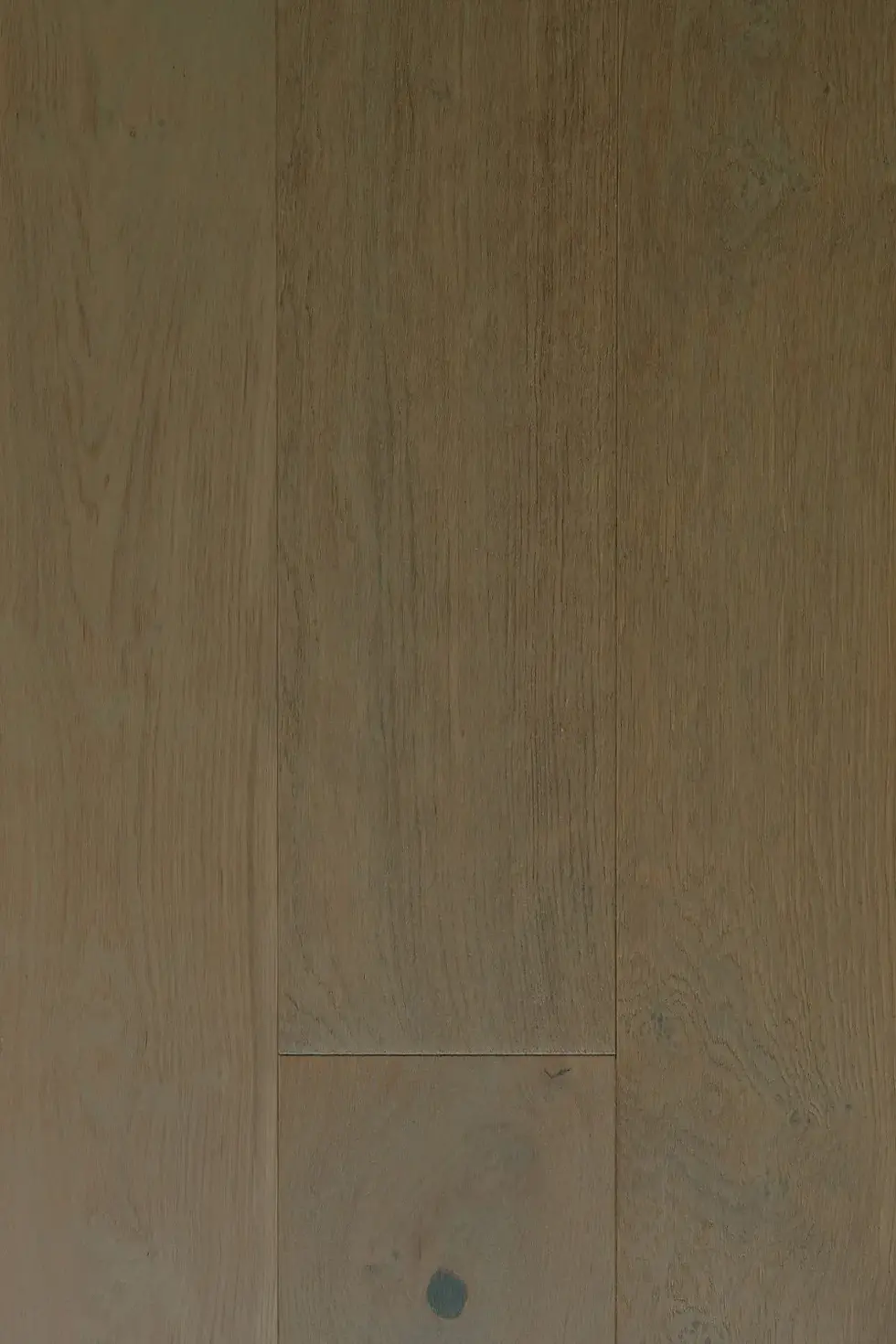
Engineered wide plank bonds a sawn hardwood wear layer to a stable, cross-layered core. Most of the wide plank floors on our product pages, including Grazari, are engineered planks 5/8 inch thick, suitable over plywood or concrete. That stability is why engineered construction dominates wide formats over slabs and radiant heat, which are common in Peninsula and East Bay new construction.
When comparing quotes, the figure that matters is the thickness of the wear layer, not the overall thickness, because it decides how many times the floor can be sanded and refinished over its life. Ask for it in writing, with the species, grade and cut of the wear layer, before comparing prices from different suppliers.
Want a second opinion on a specification or a quote? Talk with Joe Avila: call 908-232-6600 or book a virtual consultation.
7. Finish: Factory, Site, Oil or Urethane

Prefinished wide plank arrives with its finish cured in the factory. Our range includes matte UV urethane with aluminum oxide, UV lacquer, UV oil and oil finishes, and an oiled board can be listed above a urethane board of the same width and grade. Prefinished floors also cut site labor and the days a house must stand empty while finish cures.
Unfinished flooring, sanded and finished on site, costs more in labor and time but allows custom color development, fuming and hardwax oils matched to samples in the room's own light. In the Bay Area, site-applied finishes must meet California Air Resources Board and Bay Area Air District VOC limits, which favors waterborne urethanes and low-VOC oils.
8. The Jobsite: Subfloor, Moisture, Pattern and Delivery

The price on a product page is only the material. A complete budget adds subfloor flattening, moisture testing and any mitigation, underlayment or adhesive, installation, trim and transitions, and freight. Gluing as well as nailing is good practice when boards are particularly wide.
Bay Area houses add their own line items. Raised foundations in Victorian and Edwardian houses may need crawlspace moisture control before any floor goes down; slabs in new construction need moisture testing and a suitable adhesive or membrane; and foggy western neighborhoods and dry inland valleys call for different acclimation targets.
Pattern changes the arithmetic again. Many of our wide plank floors can be custom milled into herringbone or chevron, which adds milling and slower, more skilled installation. A straight-laid plank floor remains the most economical use of any given board, and a waste allowance suited to the layout keeps the order from running short.
Quick Answers
What drives the price of wide plank wood flooring?
Species, grade, width, length, sawing method, construction and finish set the material price. Subfloor preparation, moisture control, installation, waste allowance and freight complete the installed cost.
Why does wider plank flooring cost more?
Wide, clear boards come from a smaller share of each log, so supply narrows as width grows. Wider boards also move more with changes in humidity, which calls for stable engineered construction and careful moisture control.
Does grade affect wide plank flooring prices?
Yes. Prime and Select grades allow few knots and little color variation, so less of each log qualifies, and they are priced above Character and Rustic grades of similar width. Grade changes appearance, not strength.
How do I get a price for a wide plank floor in the Bay Area?
Our product pages list material prices. For a project price, call Joe Avila at 908-232-6600 or book a virtual consultation, with plans, square footage and the subfloor type.
Plan Your Wide Plank Floor With Joe Avila
Call 908-232-6600, email joe@hugginsflooring.com or book a virtual consultation.
Ready to price your floor? Book a virtual design consultation, request a sample box, or call (908) 232-6600, 9am to 5pm Eastern. We ship and deliver throughout San Francisco, the Peninsula and the Bay Area.
Explore our wide plank, herringbone, chevron and parquet floors, Wood Available Now, eco-friendly finishes and wood floor care.
Main office: 406B West Broad Street, Westfield, NJ 07090. We ship and deliver wood flooring throughout San Francisco and the Bay Area.
About The Author
Joe Avila leads San Francisco Wood Floors, part of Huggins Wood Floor Specialist, and brings 26 years of experience in wood flooring. He is an NWFA-certified wood flooring inspector, installer and sander, and has taught accredited AIA, ASID and IDCEC programs for more than a decade. He advises homeowners, designers and architects from species, grade and pattern through subfloors, moisture control and installation. To plan a floor, visit San Francisco Wood Floors.
Related Reading
Wide Plank White Oak Flooring in San Francisco: A Buyer's Guide
Wide Plank Wood Flooring in San Francisco: Species, Grades and Finishes
Rift And Quartered Or Plain Sawn White Oak: Which Should You Specify?
Engineered vs. Solid Hardwood Flooring for San Francisco Homes
How to Buy Wood Flooring in San Francisco and the Bay Area: A Step-by-Step Guide


Comments