Is Reclaimed Tobacco Pine Flooring Right For Your Home?

Updated: Nov 11

Eight ideas for deciding whether antique reclaimed tobacco pine, and its cousins heart pine and white pine, belongs in a Bay Area home.
Considering a reclaimed pine floor? Talk with Joe Avila: call 908-232-6600 or book a virtual consultation.
Reclaimed pine brings something new wood cannot: a century or more of slow growth, weathering and use, remilled into a floor. Tobacco pine is one of its most characterful forms. Here is how to judge whether it suits your rooms, your subfloor and the way your household lives, and how it compares with the other antique reclaimed floors we offer.
1. What Tobacco Pine Is

Tobacco pine is antique pine salvaged from old structures and remilled into flooring. The name is usually traced to the tobacco barns and warehouses much of it came from, where the timbers aged for generations. Our Antique Reclaimed Tobacco Pine is listed as a mix of American pines, with a smooth texture and authentic saw marks.
Because it is a blend, the color moves from pale honey to deep amber within a single room, and the occasional old nail hole or mark tells the board's history. That variation is the point. If you want a uniform, calm field, a clear-grade rift and quartered oak will serve you better.
2. Why Old-Growth Pine Differs From New Pine
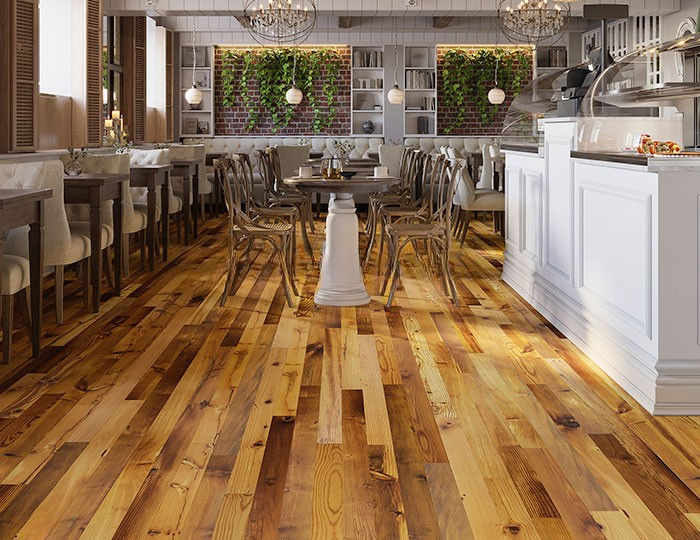
Most antique pine was cut from trees that grew slowly in natural forests over a century or more, so the growth rings are tight and the wood carries a high share of dense, resinous heartwood. Plantation pine grown fast for lumber has wide rings and more soft sapwood. That difference shows in both the look and the hardness of the floor.
The rarest variant, sinker heart pine, comes from logs that sank during river drives and were recovered from the bottom decades later. It is a separate niche from barn and warehouse timber. Our own heart pine range, from Heart Pine Select to Original Face, is graded by how much of that history shows on the surface.
3. Tobacco, Heart Or White Pine

Think of the three as a scale of character. Heart pine is the deepest in color and the most formal in its Select grade. Tobacco pine sits in the middle, a blend with more variety from board to board. Antique Reclaimed White Pine is the palest and softest, with a smooth face and occasional saw marks, suited to quiet, light interiors.
For an old-growth look in a different species, Antique Reclaimed Douglas Fir is the closest relative to the fir floors found in many San Francisco Victorians and Edwardians. Our earlier guide to wormy chestnut and heart pine covers the heart pine grades in more depth.
Comparing reclaimed pine samples? Talk with Joe Avila: call 908-232-6600 or book a virtual consultation.
4. Softness, Patina And Where Pine Belongs
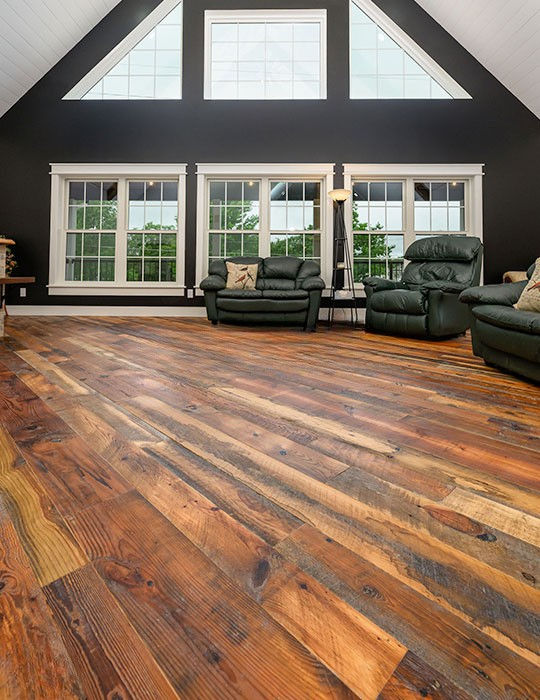
Pine is a softwood, and even dense old-growth pine is softer than white oak. Heels, dropped pans and chair legs will leave marks. On a reclaimed floor that already carries saw marks and nail holes, new dents blend into the surface rather than spoiling it, which is why the material suits relaxed rooms better than formal ones.
Place it with intent. Bedrooms, studies, dining rooms and family rooms wear it well. In a household with large dogs, read our notes on pets and wood floors first, and consider a harder species such as walnut or oak for the busiest paths if a crisp surface matters to you.
5. Widths, Lengths And Layout

Our tobacco pine is listed in random widths of 3 to 6, 4 to 8 or 6 to 10 inches, with random lengths from 2 feet up to 12 feet. Mixed widths read as historic and relaxed; the widest range suits large rooms, long hallways and open plans. Our guide to wide plank flooring explains how width changes the proportions of a room.
Wider boards move more with the seasons, so the widest option asks for steadier indoor humidity. Long boards also cost more to recover from old timbers, one reason reclaimed floors vary in price, as our piece on what drives wide plank prices explains. Ask for a layout plan before ordering, so short pieces are spread evenly.
A reclaimed floor is chosen for its history. Choose the grade for the room, and let the room choose the width.
6. Solid Or Engineered In A Bay Area House

Our tobacco pine comes in solid or engineered 3/4 inch planks. Solid boards suit a wood subfloor over a dry, ventilated crawlspace, common in older San Francisco houses on raised foundations. Engineered planks in our reclaimed range carry a 4mm nominal wear layer over a cross-laminated core, and they are usually the better choice over slabs.
That matters in the newer Bay Area: slab-on-grade additions, radiant heat in Marin and Peninsula remodels, and condominium conversions over concrete. A stable engineered plank also handles the swing between foggy summers and dry offshore autumn winds better than a wide solid board. Our fog and humidity guide sets out those seasonal shifts.
Planning a reclaimed floor over a slab or crawlspace? Talk with Joe Avila: call 908-232-6600 or book a virtual consultation.
7. Finish And How Pine Changes Color
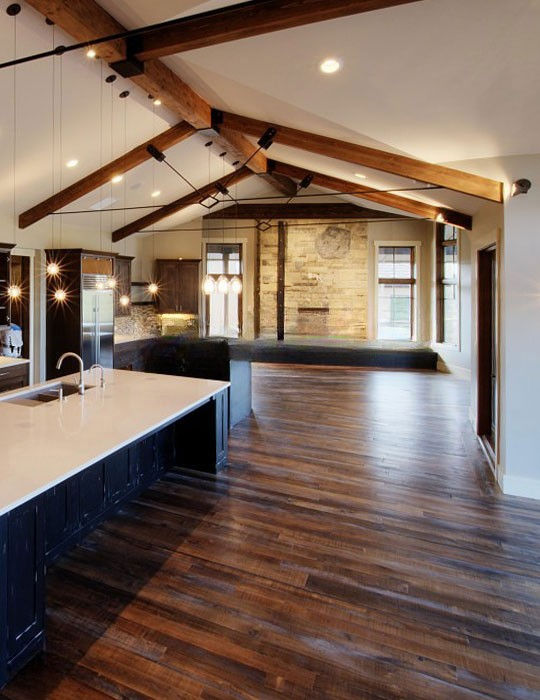
Our tobacco pine is prefinished in UV Natural Oil or UV Matte Oil. An oil suits reclaimed boards because it follows saw marks and old texture rather than bridging them with a film, and worn spots can be refreshed locally. Our comparison of hardwax oil and polyurethane explains the trade-offs in detail.
Pine also changes with light. Its resin-rich heartwood deepens toward amber and red-orange over the first months and years, faster in bright, west-facing rooms. Move rugs and furniture now and then so the color evens out, and see our notes on sun discoloration and on matte versus gloss in strong light.
8. A Specialist's Checks Before Installation
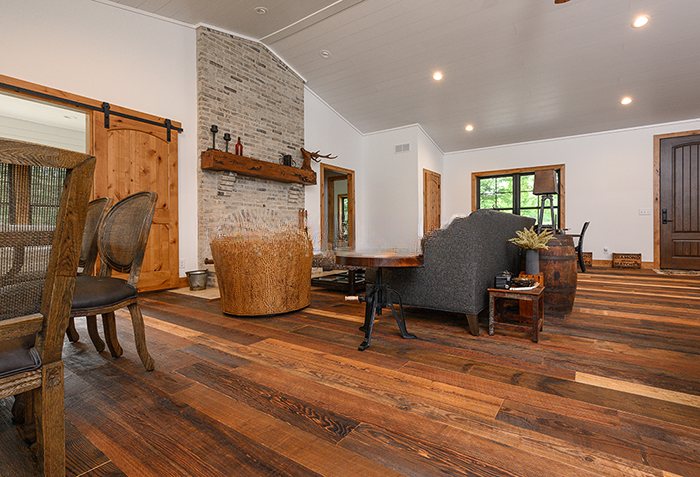
Reclaimed timber should be kiln-dried after milling, both to bring it to flooring moisture content and to set the resin, so pitch does not weep through the finish later. Remilling crews also scan old beams with metal detectors, since a hidden nail or bolt can ruin a cutter. Ask how the material was dried and check its moisture on arrival.
Use a moisture meter with a pine species correction, because readings on the default setting can be off by a point or more. The NWFA guideline compares flooring with subfloor: within 4% for strip flooring and within 2% for planks 3 inches wide or wider. Under a raised floor, a sound moisture barrier protects that balance. Inspections are usually virtual.
Quick Answers
What is tobacco pine flooring?
Tobacco pine is antique pine reclaimed from old buildings and remilled into flooring. The name is usually traced to the tobacco barns and warehouses much of it came from. Our Antique Reclaimed Tobacco Pine is a mix of American pines with a smooth face and authentic saw marks.
Is reclaimed pine too soft for a floor?
Pine is softer than oak, so it will dent under heels, chair legs and pet claws. Old-growth reclaimed pine is denser than most new pine, and many owners choose it because the marks read as patina. For heavy wear, a harder species may suit better.
What sizes and finishes does your tobacco pine come in?
Our store lists it in solid or engineered 3/4 inch planks, random widths of 3 to 6, 4 to 8 or 6 to 10 inches, and random lengths from 2 feet up to 12 feet, prefinished in UV Natural Oil or UV Matte Oil. See our wide plank floors for other formats.
Can reclaimed pine go over a slab or radiant heat?
The engineered version, a real wood wear layer over a stable core, is usually the better choice over concrete slabs and radiant heat. Solid planks suit wood subfloors above a well-ventilated crawlspace; see our engineered vs. solid guide. Call 908-232-6600 to talk through your subfloor.
Plan Your Reclaimed Pine Floor With Joe Avila
Call 908-232-6600, email joe@hugginsflooring.com or book a virtual consultation.
Ready to choose your floor? Book a virtual design consultation, request a sample box, or call (908) 232-6600, 9am to 5pm Eastern. We ship and deliver throughout San Francisco, the Peninsula and the Bay Area.
Explore our wide plank, herringbone, chevron and parquet floors, the species guide, wood cuts, eco-friendly finishes and wood floor resource guide.
Main office: 406B West Broad Street, Westfield, NJ 07090. We ship and deliver wood flooring throughout San Francisco and the Bay Area.
About The Author
Joe Avila leads San Francisco Wood Floors, part of Huggins Wood Floor Specialist, and brings 26 years of experience in wood flooring. He is an NWFA-certified wood flooring inspector, installer and sander, and has taught accredited AIA, ASID and IDCEC programs for more than a decade. He advises homeowners, designers and architects from species, grade and pattern through subfloors, moisture control and finishing. To plan a floor, visit San Francisco Wood Floors.
Related Reading
Reclaimed Wormy Chestnut Or Heart Pine: Which Antique Floor Suits Your Home?
How Do You Protect Wood Floors Over A Raised Foundation In A San Francisco Victorian?
Hardwax Oil Or Polyurethane: Which Finish Suits Your Wood Floor?
Wide Plank Wood Flooring in San Francisco: Species, Grades and Finishes
Antique Reclaimed Douglas Fir For Mission District Victorians


Comments